Books Read in 2011

Tessa's books-read-2011 book montage

Clockwork Angel
The Hunger Games
Mockingjay
Catching Fire
Sleeping Beauty: Vampire Slayer


Books Read in 2011 »
Showing posts with label FANTASY. Show all posts

Sunday, August 22, 2010

Derivative and Series


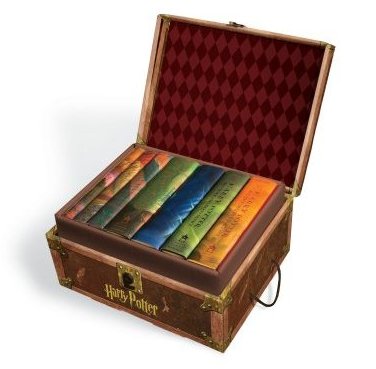
The Harry Potter Series
As many of you know, I'm writing a trilogy. It was supposed to be one book, but I realized early that I would never fit the whole thing into one book. I'm even wondering if I should write four books instead of three. I'm not so overly hung on advances if I'd get a deal, but the one thing I would absolutely insist on would be to keep the rights of all derivative works. 


I'm not sure how common it is to negotiate the derivative rights, but according to Morris Rosenthal, it's very common that authors loose those rights. In the section about Grant of Rights, he says:

"Here the author grants the publisher the right to publish the work, as protected by copyright law. For most authors this means the exclusive worldwide rights, including all derivative works, etc. While it's not in the interests of the author to give up anything without negotiation, the publisher is frequently in a better position than the author to exploit these rights (such as publishing translations), which will result in further payments to the author. If the author believes the work is likely to become a smash TV hit or the next big Christmas toy, the derivative rights could be the plum of the book contract." 

Now, I'm not really thinking about Myrkvera action-heroes or stuff like that, but I want to be able to write more books in the fantasy land I created, even if the publisher doesn't want to publish more. I want to use the characters, creatures, and towns. I also want to be able to put deleted scenes and such on my website after the series have been published. The thought of someone owning my creation in a way that denies me the right to play with it without the consent of a publishing house just scares me. Cut the advance, cut the marketing budget, but let me keep the rights to the derivative works.

Okay, I sort of lunged into that, but it wasn't what I was going to write at all! This is what sometimes  happens when my fingers touch the magical keyboard. I meant to write about standalones in series. The Lord of the Rings are not standalone books. You have to read the first before you read the second. A month ago I thought my series would end up that way. I mean, I have four teenagers trapped in another world, and they don't get home at the end of first book (I'm not really giving away any spoilers by saying this). How can that be a standalone book?

Maybe I'm misunderstanding the whole concept of standalone books in a series. The way I understand it, it's like the Harry Potter books. Harry goes to school in each book (except for the last one), follows the plot thread, completes the task at the end, and then goes back to the Dursley's. They all have a solid ending. You don't get the whole details and hints from the first books if you haven't read them, but you generally get the idea if you start by reading The Goblet of Fire. 

Then there are books like the House of Night series, where Zoey goes to a school for fledgling vampires. At the start of every single book after the first, Zoey lists up things that have happened in the past books and it irritates me so much. Possibly because I read the first five books in one sitting. Still, it bugged me. Will I have to do that to make my books standalones? I mean, who picks up a book in a middle of a series and reads it before reading book nr. 1?

Michelle Zink, author of Prophecy of the Sisters, wrote an article for WriteOnCon on the subject. She has the same kind of thoughts I've been having about ending each book. She even talks about Lord of the Rings and how her books had to be a continuation of the book before. Exactly like my musings. 

She talks about how some readers send her an angry email because of an unsatisfied ending, even though many readers just take it as it is. She says she's come to terms with it and it doesn't bother her so much anymore. That gives me time to prepare and expect the expected, since she ended the article with this:

"And honestly? If I have to choose between giving a reader an ending that makes them go, “ Wow. Cool,” and one that makes them go, “WHAT?!”, I will take the latter every time. I guess you could say that with books – as in life – I will happily choose the mysterious and winding road over the straight and narrow path. Even if it means the occasional angry email."

When I was at the conference, I kind of held my breath while I was reading that article. I thought she'd preach about how you have to have a satisfying ending to each novel in the series. I had no idea how to have such an ending (don't get me wrong: it has an ending, a good one, but at the very end I leave the reader at a bit of a cliffy - nothing huge, but it left my editor wondering if she'd gotten the whole manuscript or if there was a chapter I'd left out). I was so relieved when I read what she wrote.

How cool is it to be able to learn from published authors?

Anyway, in case the future agent/publisher would prefer the House of Night style, I did weave important details from the first book into the first chapter of the second book (Book of White). It didn't turn out too badly. It was fluent. It made sense. I'm going to keep it until I've made a final decision on how to deal with this matter.

One last note, completely unrelated: I pre-ordered a Kindle reader! I'm so excited, but I have no idea when I'll get it. I also bought a leather case - that way it'll be protected and have a booky feel to it when I flip it open to read.

I decided to purchase a Kindle because it costs so much to order a book from Amazon and have it shipped to Iceland. For a normal paperback costing $7, they'll add roughly $8 dollars for shipping and handling. Then there's 10% import tax, and 7% VAT (they're considering raising it to 25% on books to try to get us out of the recession. Hello! Common sense here. Higher VAT = less buying). That makes one measly paperback a little under 18 dollars! If I buy more books in one shipping, I have to pay extra $4 for each book. Compare that to buying the same book for a final price of 5-6 dollars.

I bought a Kindle for $140 + roughly $8 for shipping and handling. 10% tax + 25% VAT (for electronic products) makes $204 the final price. I'm taking English (BA) at uni and there are a lot of old books to read (all of whom are free for Kindle!). This semester alone I have to read Jane Eyre (already read it - looooved it) and A Christmas Carol by Charles Dickens. That's $16 saved :) There are even more old books to read next year.

It'll pay off in no time ;)

Wednesday, July 14, 2010

Lord of the Rings meets Me

My twins are on a month’s vacation from their kindergarten and they’re wearing me out! Due to this fact, I won’t have as much time to blog (or write *whine*), but I’ll try to get in two-three blogs a week.

I‘ve been reading a lot of books in my genre (YA fantasy), and I‘m especially interested in the vampire series. It is important to read a lot in your genre to be able to compare your work and see what works and what doesn‘t. While I read, I also try to think about what makes the book interesting, what keeps me reading, how chapters end, the much important “voice” (which is something I hadn't heard of until two months ago), how each chapter is constructed, and I look out for hints throughout the book and then guess at the ending (which has spoiled books for me, since I can often guess at the ending in the middle of the book). I then compare these things to my novel. I can say this: I read books in a whole new way since I started writing.

It‘s hard for me to find exactly what I need to compare my books to, other than the technical factors. If I were writing a vampire book, it would be easy to explain how it is different from other vampire books. I’d like to be able to do the “meets” thing—you know: Lord of the Rings meets Ella Enchanted meets Morganville Vampires, but all I can come up with is the Lord of the Rings because my land is medieval and there are wizards. There aren’t even dwarves in the land or dragons (which is why I can't use Eragon as a “meets”).

I suppose I could say Lord of the Rings with a dash of humor, pinch of romance, two spoonfuls of mystery and three cups of sexy darkness. That’s still not a good way to give people an idea of what it is. I intend to do a lot of reading this month of exhaustion and maybe I’ll come across a book that I’ll be able to use as a “meets”.

I’m often disheartened when I read really interesting books and I think that I’ll never get there, but then I remind myself that a) Stephenie Meyer was a miracle case and most writers have been writing for years before getting published, b) their manuscripts go through serious changes and rewrites with the aid of the publisher’s editorial team before they are ready, and c) my manuscript is darn good, so there’s no reason to put myself down. Again, I wonder if I should change the first chapters, but I decided two weeks ago that it was good as it is and I’d just have to have some faith.

I’ve also been thinking more about e-books and Kindle. If I would publish the series that way, I could just write and write, and it would urge me onwards just to have the next book out there. I know myself and know that even if I only had one reader out there, I’d finish the series because I’d know that there’s a person out there who likes my story.

I figure that if I continue to write a lot and publish books on Kindle, eventually some people will like what I write and will want to read the other books as well. They’ll tell their friends and so on. Of course I’d try to market myself on the internet, but I’d have to promise myself to be patient and not to be worried about slow sales to begin with. I want writing to be my career and this is one way to start it. Who knows, maybe an agent/publisher would notice my work out there and offer me a deal. I know that’s a dream-case scenario, but it has happened and will happen again.

The rejection toll is up to 14 now. All polite form rejections (which I appreciate). I respect that those 14 had the courtesy to reply; I know that many won’t. I’ll also have to sort through which I’m allowed to re-query (a different agent within the agency). I already re-queried the very first one that I queried over a month ago, but I haven’t heard back from her since I sent the re-queried letter last week.

Task for the day: Read.

Thursday, July 1, 2010

Fantasy Genre

Vampire Girl from the Dark Moon homepage

I'm a total sucker for vampires. Ever since I watched the movie Interview with a Vampire in my teen years, I've been hooked on those fang-bearers. I even love watching Angel! (The vampire, not a fallen angel). I absolutely adore Charleine Harris's Sookie Stackhouse series, and I read any YA vampire novel I can get my hands on.

I didn't choose to write about vampires when I was designing my story. I started creating my magical characters before Twilight hit the theaters (which was when I discovered the books), so YA vampires weren't big in my world at the time. I should be thankful for thinking outside the box when I decided to write a book, because now agents and publishers aren't taking in new vampire novels. At the time, I had no idea there were such things as trends in book publishing, and I thought that if someone wrote a good vampire novel, they'd get it published. As for me, I suppose I wanted to create something that was mine from the start.

I have also read books about fallen angels. I must admit that angels don't appeal to me as much. I don't know what it is. They're supposed to have the dark element, but they just don't do it for me. I'm now reading Fallen, by Lauren Kate, and we'll see how I feel after that. It's definitely something I wouldn't choose to write about.

Then I've read books about fairies, and I honestly don't know if I could ever write books about fairies. At least not the kind of fairies I've read recently. Elves are a different matter, and to me, they're not the same (although they sometimes seem to star in fairy books).

I can't bring myself to check out a werewolf book from the library. I've seen them in movies and read about them as vampires vs. werewolves, but I always cheer for the vampires. Edward was always the one I rooted for, and Jacob was just annoying at times. The same goes for the movie Underworld, which really wasn't a great movie, but it's about vampires, and so I watched it. Charleine Harris has werewolves and fairies, but I let that slide because I love her vampires so much.

I suppose that if I can't write about vampires (if I want to be published -- and I do), I'll have to continue creating my own race of fantasy creatures. I don't know if that'll ease my way into publishing or hinder, since it might be a risk for publishers to introduce new creatures. I have caught myself wondering if I should write a vampire series, I even have an idea for one, but reading the agent/publisher blogs I've decided not use my time on that and rather continue with my own creation.

Vampire books will always be the thing I love to read. I hope that although agents/publishers are rejecting such books today, they'll never stop completely so that suckers, such as I, can continue reading what we love.

What are your favorite creatures in fantasy novels?

Friday, June 25, 2010

Stumped by the Story Question

Which Way?

Randy answered my question about placing the story question in the novel. My question was:

I followed the Writing Fiction for Dummies book to the letter after I wrote my novel, all except the part about a scene list. I thought it would take too much effort. I realized yesterday that I need to shift the scenes around, and I so regret not writing that list.

I’m going mad with trying to figure out how it all connects if I move two of my scenes earlier (so that the REAL story question of the book is in the first quarter, and not closer to the middle). There’s ton of things happening in the first 1/3 to keep the reader occupied, and I’ve been dropping clues left and right, all carefully concealed to the best of my ability.

The real story question is basically if the kids should choose between good or evil, but up until then the reader will have thought that the story question is how to get home, since that’s what the kids have been doing up until about 1/3 of the story.

How to get home is the ultimate goal, and the story question of the whole trilogy (this is book one).

How important is it to have the true story question of the book in the first quarter as opposed to nearer to 1/3 of the book?

Thanks in advance. I’ll appreciate help with this.

He gave me a very long, elaborate answer with examples of the five pillars of fiction; Storyworld, Characters, Plot, Theme, and Style.

Basically he said that if the story is plot-driven, as mine is, the story question should be clear very early in the manuscript. This had me sighing a little, but then I figured that I'm introducing a whole new world, and I felt that I couldn't go right into the story question (good or evil) until after I'd done some fair introduction. One of Randy's readers, Timothy R. Greene, commented and said that he likes to push the story question back for as long as he can. He thinks that it makes the story more of a mystery and keeps the reader interested.

I checked my manuscript and the story question is literally spelled out on page 112 of a 254 paged story. That's more than 1/3'd way through; it's closer to the middle. I honestly don't think that moving it forward will improve the story, since the ultimate goal is to get home and that's clearly obvious in the first 30 pages, but in order to get home they have to choose a path. They only get that information after having traveled the land, seen the evil race, and discovered and trained their different abilities. I tried moving the question closer to the beginning, but it just didn't work and didn't feel right, so I think I'm going to listen to my gut on this one.

I think that if I were to try again, I'd have to rewrite the whole thing from start. I'll have that as a backup plan if I only get rejections from both agents and publishers.

Task for the day: Read two chapters and fix in the document.

Friday, June 18, 2010

Fantasy Forever

By bkharmaw on photobucket.com

Wow. I completed my query letter yesterday and sent it off to have it proofread. It'll take 1-2 days and it's already been one, and I'm oh-so-tired of waiting. How will I be when I actually send it and have to wait for a response? At least I feel that I'm ready to send it, and that's a good sign.

Since yesterday, I've been reading the manuscript yet again, and I'm so glad I did. Last time I read it, I made so many changes, so I've already found five places half way through where I forgot to delete a word. Naturally, I used the opportunity to change other little things as well.

--> Read the manuscript again if you've made a lot of changes.

I don't think I'll read it again though. I think I must have read all of the 250 word pages at least twenty times, and I so want to get the novel out there and try my luck. Honestly, I've read the manuscript so many times that I think I can tell the story blindfolded. At least I'll be able to tell the agent/publisher how changes would affect the rest of the chapters.

The query letter turned out nicely, I think. I've been poring over different hooks and then suddenly a good one came to me. I hope it'll catch the attention of the agent, if not, then I'll have other query letters ready, just in case.

--> If you're exclusively querying an agent, have other queries ready in case he/she turns you down.

As I've said before, I'm only going to query this one exclusively, and then I'll send a bunch if he declines.

I read an interesting interview with Stephenie Meyer. She said that she sent out 15 queries. Five didn't answer back and eight turned her down. She then got an agent deal and a huge book deal, and shortly after she received the ninth rejection letter that was terribly rude, saying that she'd never get published etc.

I find myself asking, why would agents send such rude letters? I can understand it if the writer querying is rude in his/her letter, but why be so mean?

I don't know. Yes, it's nice to get a critique, even if they break your heart, but downright rude critiques? I just don't see the point in them. At least this example shows how different agents are in their tastes.

I'm still bracing myself for the whole process of agent questing. As I've said before, I'm going to view the rejection letters as a part of the process and nothing personal (even if I'll get a rude letter like Meyer got). I'm kind of looking at it as a challenge, and I'm actually kind of looking forward to it.

And I'm so determined to get my book published. If it won't, I think I'll even re-write it, because the story idea and characters are good, and it's different and fresh. I wrote it before I knew anything of the market (the requirements, structure etc.), and then edited it afterwards. I've also been reading a lot of books in my genre recently and noticed that my novel doesn't start as quickly as they do. I think that if I'll get turned down by everyone, I might rewrite the first half of the novel (ugh, but it would be a challenge, and as I said: it's going to get published).

--> Be positive and keep rooting for your book!

I've also been worried about the trend of fantasy dieing down, but then I read somewhere that even though the agents are turning down all queries containing the word "vampire"; my novel doesn't have vampires in it. The beings I have created are different (and aren't remotely related to vampires), and might be just what the agents are looking for.

Fantasy will never die. It's been alive since our ancestors were telling stories about elves, trolls, Odin, Thor, and the rest in Valhalla. Even the ancient Egyptians told fantasies. It's in our blood, and it will continue to fascinate future generations.

So, I'll let myself believe that although vampires may be getting old, other kind of fantasy will take its place for now.

Task for the day: Read the next chapter.

Have a nice day!

P.S. Vampires may be fading, but I'm still heavily sucked in. I'm currently reading the House of Night series by P.C. and Kristin Cast.

First-Time Author

Hello,

I'm Tessa Quin (32), a first-time author of a YA fantasy/adventure novel. The novel is complete at around 120,000 words, and is the first in a series. I'm getting ready for the process of finding a literary agent.

The main purpose of this blog is to follow the process of getting an agent, in hope that it can be of use to others in the future. I will mention no names of agents in any of my blogs – with the possible exception of the agent I’ll sign up with.

I have one particular agent in mind, and I plan to query him exclusively and see if he will request the manuscript. If not, I'll start sending queries to various agents.

Right now I'm going over the manuscript yet again (perfectionist here - it's a curse), and I deleted a chapter (roughly 6,000 words) and wrote a shorter scene to deliver the same results. I did this because I thought the old scene was too much of a sidetrack, and now the manuscript is more linear with the story goal.

--> Stick to the plot and try not to sidetrack too much.

Plus, the manuscript is around 120,000 words, instead of 125,000, which might be a bit too much when it comes to publishing a first time author. Apparently, 80,000-100,000 words is what publishers look for in a YA novel, but fortunately, some have been known to bend that rule.

--> A YA novel should usually be no more than 100,000 words.

This is not the first time I delete such a chunk, I deleted the whole second chapter and rewrote it to make it more interesting. The result was a much better, more to-the-point chapter that I think my future readers will appreciate.

I'm also working on my proposal. I'm the type of person who likes to have everything ready upon request, and that's why I haven't sent out queries yet. I think it’s a good idea, and I think the agents will appreciate it.

--> Have a full proposal at the ready, or at least most of it done before querying.

I think that my main obstacle is that I don't live in America, and so it'll be difficult to find a literary agent in the USA. I live in Iceland, and as far as I know, I have no foreign traces in my blood. Needless to say, Tessa Quin is my pen-name, because my real name is a bit of a mouthful for foreigners.

I chose to publish in the United States because the market in Iceland is very small (it's a nation of roughly 300,000 people). That means that my possible readership would be maybe 60-70,000, minus the fact that many Icelandic teens don't like to read, so in the end, I'd be faced with a very small readership.

Do I believe that more teenagers in America would buy my book? Absolutely! The book is fresh, fun and filled with plots and interesting characters. I get inspired by Iceland, the scenery, the people, the folklore and history. I also believe that the book will sell well in other foreign markets. Plus, my English is excellent, and I’m not too modest to say so ;)

When I’m writing (and I always write in English), I’m in my element. That’s why I chose to take the leap and dedicate myself to the craft. I’m determined to see this brilliant book get published.

Thanks for reading and have a good day,

Tessa Quin